Tudor Solihull & Medieval Market Town Walk
Short heritage walk through Solihull’s market-town core, Tudor-grange landscape and civic centre.
Tudor Solihull & Medieval Market Town Walk is a self-guided tour in Explore that can be experienced through the Guides website or mobile app for a smooth, immersive tour experience while exploring. It is suited to travellers interested in sightseeing experiences.
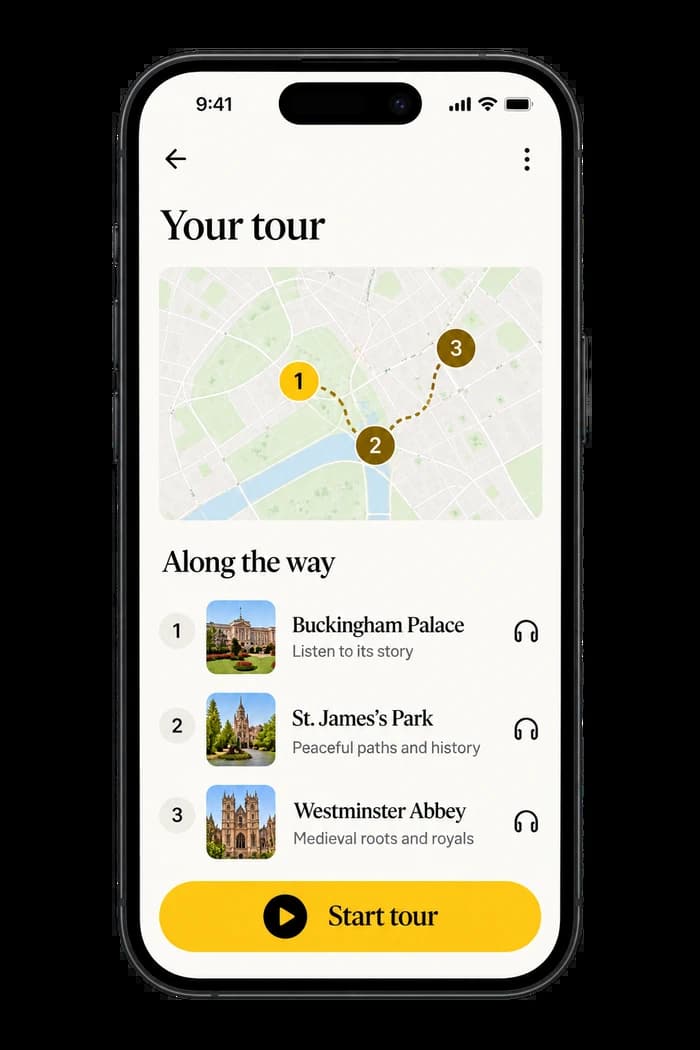


About the tour
Explore other toursThis tour is centered around Solihull's town center explaining how Solihull evolved from a medieval trading place into a modern commuter town with a strong heritage identity.
Preview stop
01
Station Approach / Solihull Station Interchange
Begin beside the station approach, where modern Solihull announces itself as a commuter town but also quietly reveals its older role as a market centre that grew by adapting to new transport. The railway arrived here in the nineteenth century and shifted Solihull’s economy toward faster movement of people, goods and ideas. That matters because medieval market towns often survived only if they could reinvent themselves, and Solihull did exactly that. The official Rail Trail built around the station now treats this point as the gateway to a circular walk through the town centre, Tudor Grange and Malvern and Brueton Park, so even today the station is the hinge between local history and daily life. Look at the roads converging ahead and you can read a lesson in urban geography: transport nodes shape land values, retail flows and where civic buildings cluster. There is also a second lesson here about British town growth. Solihull was never a giant industrial city like nearby Birmingham; instead it prospered by staying connected while keeping a smaller market-town scale. From this standing point, the story of the walk is already visible: rail age convenience, older street lines beyond it, and a town still balancing heritage with twenty-first-century mobility.